

How to Improve Crane Safety in Industrial Operations Using Wireless Remote Control Systems
In modern industrial environments, crane safety remains a critical priority for factories, warehouses, construction sites, and manufacturing facilities. As operations become more complex and demand higher efficiency, traditional crane control methods are increasingly being replaced with advanced wireless systems. One of the most effective solutions is the use of a telecrane remote control system, which significantly improves operational safety, precision, and overall workflow control.
Importance of Crane Safety in Industrial Operations
Crane systems are essential in material handling industries, but they also introduce high operational risks if not properly managed. Safety failures can lead to serious consequences, including workplace injuries, equipment damage, and production delays.
In most industrial environments, crane safety is not only a regulatory requirement but also a key factor in maintaining operational continuity and workforce protection.
Common Risks in Crane Operations
Understanding operational risks is the first step in improving safety standards. Some of the most common crane-related risks include:
- Load instability during lifting or lowering
- Limited operator visibility in traditional control setups
- Miscommunication between ground staff and operators
- Operator proximity to moving or suspended loads
- Electrical or mechanical control failures
- Overloading beyond rated capacity
These risks highlight the importance of adopting safer and more advanced control systems.
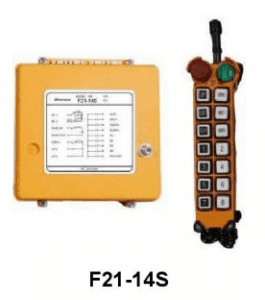
What Is a Wireless Crane Remote Control System
A wireless crane control system, such as telecrane remote control, allows operators to control lifting operations remotely using a handheld transmitter. This removes the need for fixed wired pendant controls and enables greater freedom of movement.
Instead of standing near the crane or load, operators can position themselves at safer and more strategic viewpoints to improve visibility and decision-making during operations.
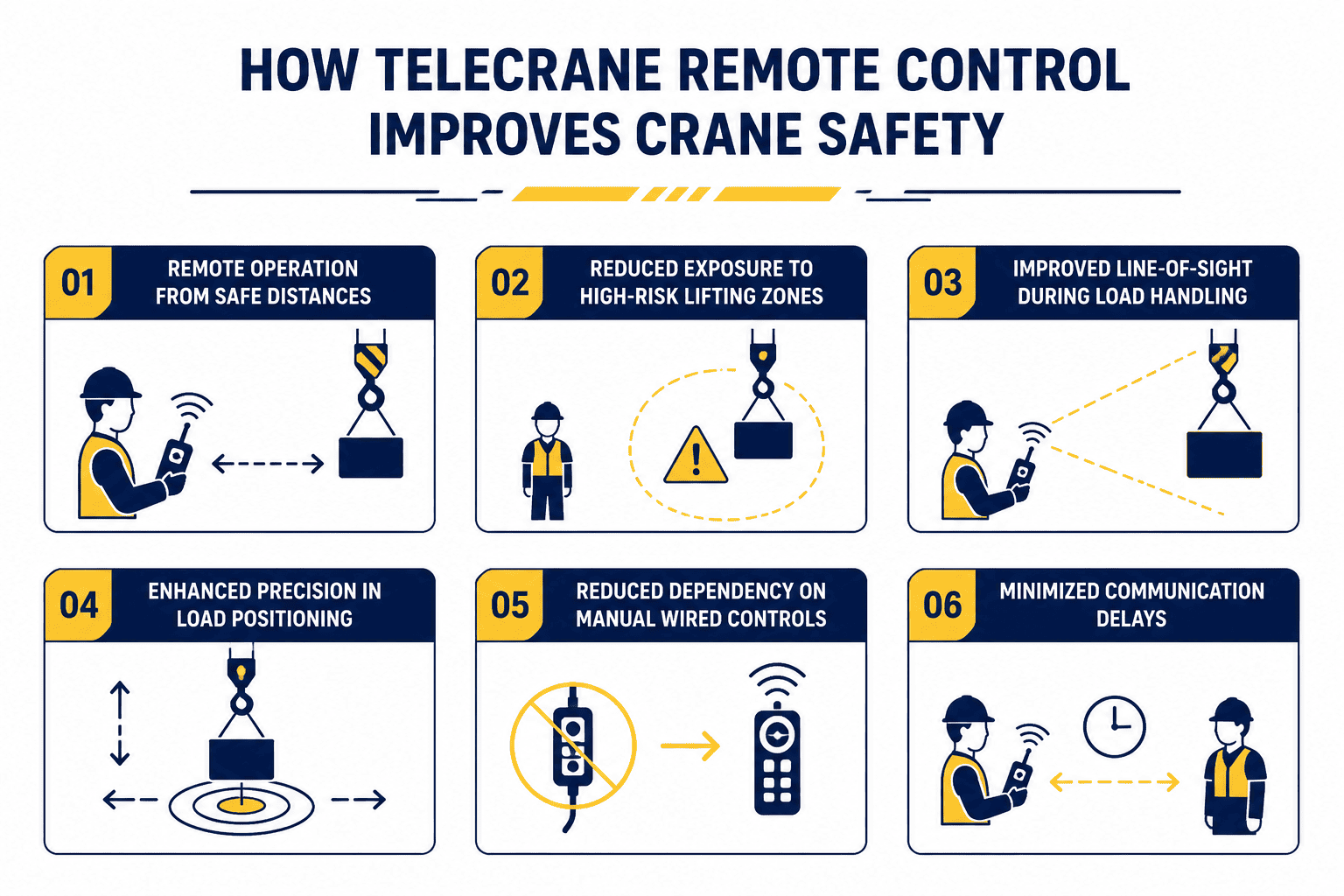
How Telecrane Remote Control Improves Crane Safety
The integration of telecrane remote control systems significantly improves crane safety by enhancing operator control, reducing direct exposure to hazards, and improving overall lifting accuracy in industrial environments. These improvements help create a safer and more efficient working process during daily crane operations.
Remote Operation From Safe Distances
Wireless control allows operators to manage crane movements without staying close to the lifting area, improving safety and operational flexibility.
- Operators can control cranes away from suspended loads
- Reduces exposure to hazardous lifting zones
- Improves overall workplace safety
Reduced Exposure To High-Risk Lifting Zones
By removing the need for close physical interaction with lifting operations, operators are better protected from potential hazards.
- Minimizes time spent near moving equipment
- Lowers risk of accidents during load movement
- Improves operator protection in busy work areas
Improved Line-Of-Sight During Load Handling
Operators can position themselves in safer and more strategic locations to monitor lifting activities more clearly.
- Operators can choose better viewing positions
- Reduces blind spots during lifting operations
- Enhances situational awareness
Enhanced Precision In Load Positioning
Better control responsiveness allows more accurate movement and placement of heavy materials.
- Better control accuracy during lifting and lowering
- Reduces load swinging and misalignment
- Improves handling of heavy materials
Reduced Dependency On Manual Wired Controls
Wireless systems remove physical limitations caused by fixed pendant controls, allowing smoother operation.
- Eliminates restriction of fixed pendant controls
- Allows more flexible crane operation
- Improves movement efficiency
Minimized Communication Delays
Direct wireless operation improves coordination between operators and equipment, reducing response time.
- Direct wireless control improves response time
- Reduces miscommunication between teams
- Enhances coordination during operations
Operational Advantages in Industrial Environments
Beyond safety, wireless crane control systems also provide strong operational benefits.
Better Situational Awareness
Operators can move freely around the workspace and choose optimal positions for monitoring load movement.
Improved Coordination
Wireless control allows better coordination with ground teams, especially in busy industrial environments.
Reduced Human Error
Clear visibility and direct control reduce mistakes during lifting and positioning operations.
Higher Productivity
Faster response time and smoother load handling improve overall operational efficiency.
Application in Malaysian Industrial Sectors
In Malaysia, telecrane remote control systems are widely adopted across industries that rely heavily on crane operations.
These include:
- Manufacturing and production facilities
- Steel fabrication and metal processing workshops
- Logistics and warehouse distribution centers
- Construction and infrastructure development projects
- Heavy engineering and machinery assembly plants
These sectors benefit significantly from improved safety standards and operational efficiency.
Integration With Modern Crane Systems
Wireless control systems are often integrated with other crane components to further enhance performance and safety.
Common integrations include:
- Overhead crane systems
- Gantry crane systems
- Hoisting equipment
- Festoon cable systems for power management
This combination allows smoother operation, better load control, and improved system reliability.
Safety Compliance and Industrial Standards
Modern industrial operations are increasingly governed by strict safety requirements. Wireless crane control systems help companies align with:
- Workplace safety regulations
- Industrial operational guidelines
- Risk management standards
- Equipment handling best practices
By reducing operator exposure and improving control accuracy, these systems support safer compliance outcomes.
Future of Crane Safety in Industrial Operations
The future of crane safety is increasingly moving toward automation, wireless control, and smart industrial systems. As technology advances, wireless remote control systems will continue to play a major role in:
- Reducing workplace accidents
- Improving operational intelligence
- Enhancing precision lifting
- Supporting smart factory environments
Industries that adopt these systems early gain a significant advantage in safety and productivity.
Final Thoughts: Focus on Operational Fit, Not Just Equipment Type
Improving crane safety requires a combination of better control systems, improved visibility, and reduced operator exposure to risk. The adoption of telecrane remote control systems provides a practical and effective solution for achieving these goals in industrial environments.
With enhanced safety, improved operational accuracy, and stronger workflow efficiency, wireless crane control technology continues to play an essential role in modern Malaysian industrial operations.
Improve Your Crane Safety with the Right Control System
Enhancing crane safety starts with selecting a reliable and efficient control system that supports accurate operation and reduces workplace risks, while also improving operator control and load handling precision during daily industrial lifting activities.
Contact HKD Products for expert advice, technical support, and reliable telecrane remote control solutions for industrial applications.
Frequently Asked Questions (FAQs)
What is a wireless crane remote control system used for?
A wireless crane remote control system is used to operate overhead cranes and hoists remotely, allowing operators to control lifting, lowering, and movement safely from a distance.
Is a wireless crane remote control safe to use in industrial environments?
Yes. It improves safety by allowing operators to stay away from suspended loads and hazardous zones while maintaining full control of crane operations.
What is the operating range of a telecrane remote control?
The operating range depends on the model and environment, but most systems provide stable and reliable control across typical industrial working areas.
Can a wireless remote control be used with existing crane systems?
Yes. Most telecrane remote control systems can be integrated with existing overhead cranes, gantry cranes, and hoisting equipment.
What should be considered when choosing a crane remote control system?
Key factors include load requirements, operating environment, control functions needed, safety features, and compatibility with existing crane systems.
Disclaimer
We hope you find this article helpful and informative. The content provided is for general informational purposes only and does not constitute professional advice or reflect the full scope of services offered by HKD Products Sdn. Bhd.
For tailored recommendations or technical guidance, please consult a qualified professional or contact us directly. While we strive to ensure accuracy and completeness, HKD Products Sdn. Bhd. makes no guarantees and accepts no liability for any errors or omissions in this article.