

Wire Rope Hoist Maintenance Guide: How to Extend Equipment Lifespan and Reduce Downtime
Proper maintenance plays a critical role in ensuring the long-term performance, safety, and reliability of lifting equipment in industrial environments. A wire rope hoist in Malaysia is widely used in manufacturing plants, warehouses, construction sites, and heavy engineering industries due to its strong lifting capacity and durability. However, without proper maintenance practices, even high-quality hoists can experience reduced efficiency, unexpected breakdowns, and safety risks.
This guide provides essential maintenance practices to help extend equipment lifespan and reduce downtime in daily industrial operations.
Importance Of Wire Rope Hoist Maintenance
Regular maintenance is essential for maintaining safe and efficient lifting operations. A poorly maintained hoist can lead to operational delays, increased repair costs, and potential workplace hazards.
Proper maintenance helps:
- Improve operational safety
- Reduce unexpected equipment failure
- Extend service life of components
- Maintain consistent lifting performance
- Minimize production downtime
Understanding How A Wire Rope Hoist Operates
Understanding the basic working mechanism helps operators and maintenance teams identify issues more effectively before they become serious problems.
A typical wire rope hoist in Malaysia consists of:
- Electric motor system
- Wire rope and drum assembly
- Hook and lifting attachment
- Brake mechanism
- Electrical control system
Each component must work together smoothly to ensure safe and stable lifting operations.
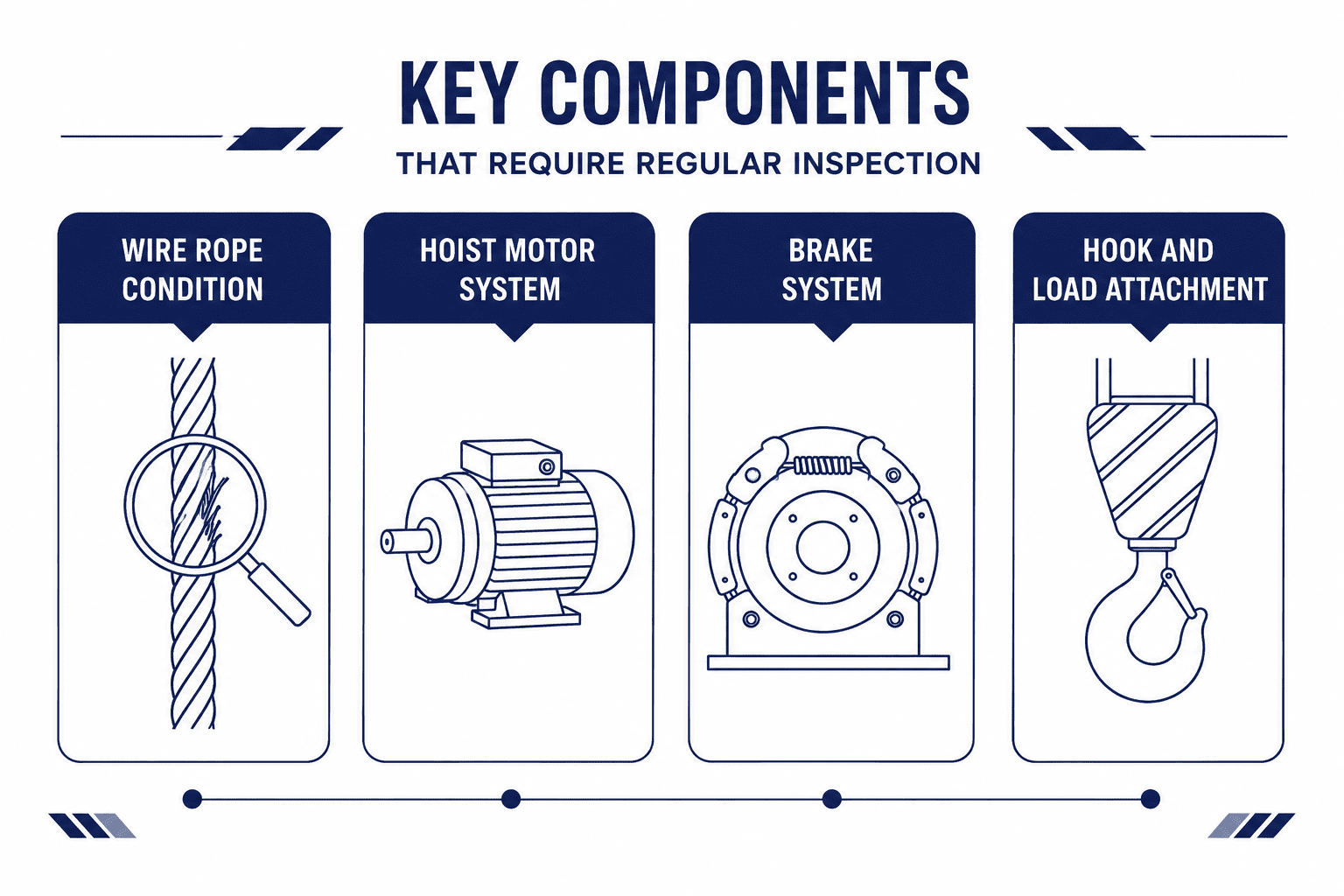
Key Components That Require Regular Inspection
A wire rope hoist consists of multiple mechanical and electrical components that must be inspected routinely to ensure safe operation.
Wire Rope Condition
The wire rope is one of the most critical components and should be checked for:
- Fraying or broken wires
- Deformation or kinks
- Corrosion or rust
- Uneven wear patterns
Hoist Motor System
The motor should operate smoothly without unusual noise or overheating. Regular checks help ensure stable performance during lifting operations.
Brake System
The braking system is essential for load control and safety. It must be inspected to ensure proper engagement and holding capacity.
Hook And Load Attachment
Hooks should be checked for cracks, bending, or wear. Safety latches must function properly at all times.
Common Signs Of Wire Rope Hoist Wear
Early detection of wear helps prevent unexpected failures and costly downtime.
Common warning signs include:
- Unusual grinding or squeaking noise
- Slow or inconsistent lifting speed
- Excessive vibration during operation
- Rope misalignment on the drum
- Brake slipping during load holding
Ignoring these warning signs can increase safety risks and damage critical components.
Daily Maintenance Practices
Daily inspection routines help detect early signs of wear and prevent major failures.
Recommended daily checks include:
- Visual inspection of wire rope condition
- Checking abnormal noises during operation
- Testing lifting and lowering functions
- Ensuring proper lubrication levels
- Verifying control system responsiveness
Importance Of Proper Lubrication
Lubrication is essential for reducing friction and protecting moving components from excessive wear.
Benefits of proper lubrication include:
- Smoother lifting operation
- Reduced wire rope abrasion
- Lower motor strain
- Improved component lifespan
- Better operational efficiency
For industrial environments in Malaysia, proper lubrication is especially important due to humidity and dust exposure.
Periodic Maintenance Schedule
In addition to daily checks, scheduled maintenance ensures long-term reliability of a wire rope hoist in Malaysia.
Weekly Maintenance
- Lubricate wire rope and moving parts
- Inspect electrical connections
- Check alignment of lifting components
Monthly Maintenance
- Inspect brake system performance
- Check motor temperature and load response
- Tighten loose mechanical components
Annual Maintenance
- Full system inspection and load testing
- Replacement of worn components
- Electrical system diagnostics
- Professional servicing and calibration
Recommended Wire Rope Hoist Maintenance Schedule
| Maintenance Type | Frequency | Key Checks | Purpose |
|---|---|---|---|
| Daily Inspection | Every Use | Wire rope condition, noise, control response | Detect early issues before operation |
| Lubrication Check | Weekly | Rope lubrication, moving parts | Reduce friction and wear |
| Functional Check | Monthly | Brake system, motor performance, limit switches | Ensure stable operation |
| Deep Inspection | Quarterly | Drum condition, rope wear, electrical system | Identify hidden mechanical issues |
| Full Service | Yearly | Load testing, component replacement, calibration | Ensure compliance and long-term safety |
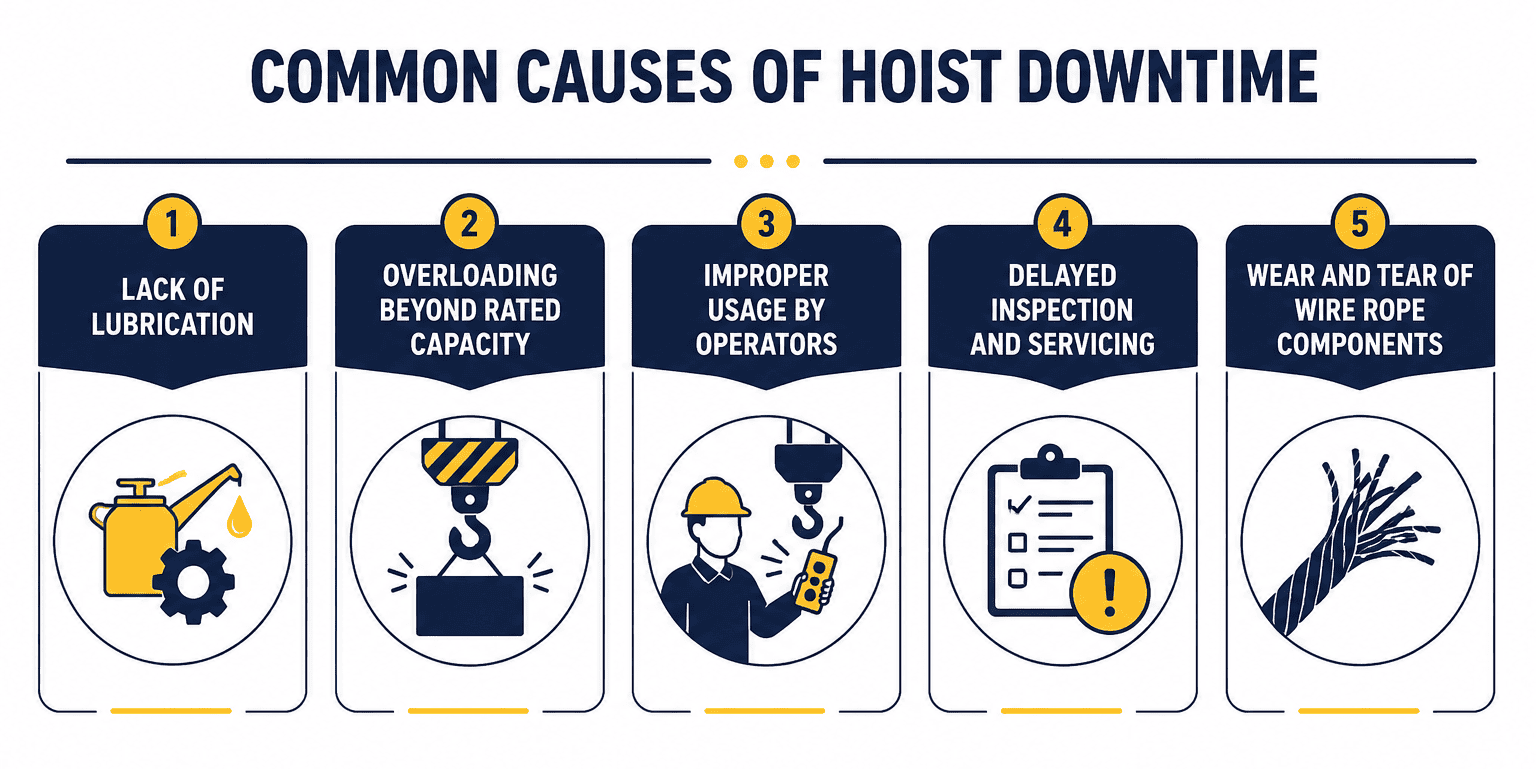
Common Causes Of Hoist Downtime
Understanding the root causes of hoist failure helps reduce unexpected breakdowns and improve operational reliability in industrial environments.
Lack Of Lubrication
Insufficient lubrication increases friction between moving components and accelerates wear.
- Causes faster wire rope deterioration
- Increases mechanical resistance
- Leads to overheating and reduced efficiency
Overloading Beyond Rated Capacity
Exceeding the hoist’s load limit puts excessive stress on all mechanical parts.
- Damages wire rope and drum system
- Increases risk of sudden failure
- Reduces overall equipment lifespan
Improper Usage By Operators
Incorrect handling practices can significantly impact hoist performance and safety.
- Sudden start-stop operations
- Incorrect lifting techniques
- Ignoring abnormal machine behavior
Delayed Inspection And Servicing
Skipping or delaying maintenance allows minor issues to develop into major failures.
- Hidden faults go undetected
- Higher repair costs over time
- Increased risk of unexpected downtime
Wear And Tear Of Wire Rope Components
Natural wear occurs over time due to continuous lifting cycles and heavy usage.
- Fraying or broken wire strands
- Rope deformation or flattening
- Reduced lifting reliability over time
Final Thoughts: Focus on Operational Fit, Not Just Equipment Type
A well-maintained wire rope hoist in Malaysia ensures safer operations, higher efficiency, and reduced downtime across industrial applications. Regular inspections, proper lubrication, and timely component replacement all contribute to extending equipment lifespan and maintaining reliable performance.
By adopting a structured maintenance routine, industries can significantly improve operational productivity while reducing long-term repair and replacement costs.
Get Expert Support For Your Wire Rope Hoist Maintenance
Ensure your wire rope hoist in Malaysia operates safely and efficiently with proper maintenance practices and professional guidance. Contact HKD Products for reliable solutions, technical advice, and support tailored to your industrial lifting requirements.
Enquire now to get professional advice and pricing for wire rope hoist systems in Malaysia.
Frequently Asked Questions (FAQs)
What is a wire rope hoist used for?
A wire rope hoist is used for lifting and moving heavy loads in industrial environments such as factories, warehouses, construction sites, and manufacturing plants. It is commonly used for high-capacity and continuous lifting operations.
How do I choose the right wire rope hoist for my application?
The right wire rope hoist depends on factors such as load capacity, lifting height, duty cycle, operating environment, and installation type. It is important to match the hoist specification with your actual industrial requirements.
How often should a wire rope hoist be serviced?
A wire rope hoist should be inspected regularly, with basic checks done daily and more detailed maintenance performed on a scheduled basis. Regular servicing helps ensure safe operation and reduces unexpected downtime.
What are the common signs of wire rope hoist wear?
Common signs include unusual noise, slow lifting speed, visible wire rope damage, brake issues, and inconsistent operation. Early detection of these signs helps prevent major equipment failure.
Can wire rope hoists be used in heavy-duty industrial applications?
Yes, wire rope hoists are specifically designed for heavy-duty applications and are widely used in industries that require reliable and continuous lifting of heavy materials.
Disclaimer
We hope you find this article helpful and informative. The content provided is for general informational purposes only and does not constitute professional advice or reflect the full scope of services offered by HKD Products Sdn. Bhd.
For tailored recommendations or technical guidance, please consult a qualified professional or contact us directly. While we strive to ensure accuracy and completeness, HKD Products Sdn. Bhd. makes no guarantees and accepts no liability for any errors or omissions in this article.